
Lynchburg, VA
Lynchburg Wet-Weather Storage and Overflow Reduction
Combined sewer overflow reduction
Lynchburg added wet-weather storage and expanded its ability to pump and treat storm flows. The project was part of the city’s plan to reduce combined sewer overflows into the James River. [1] [3]
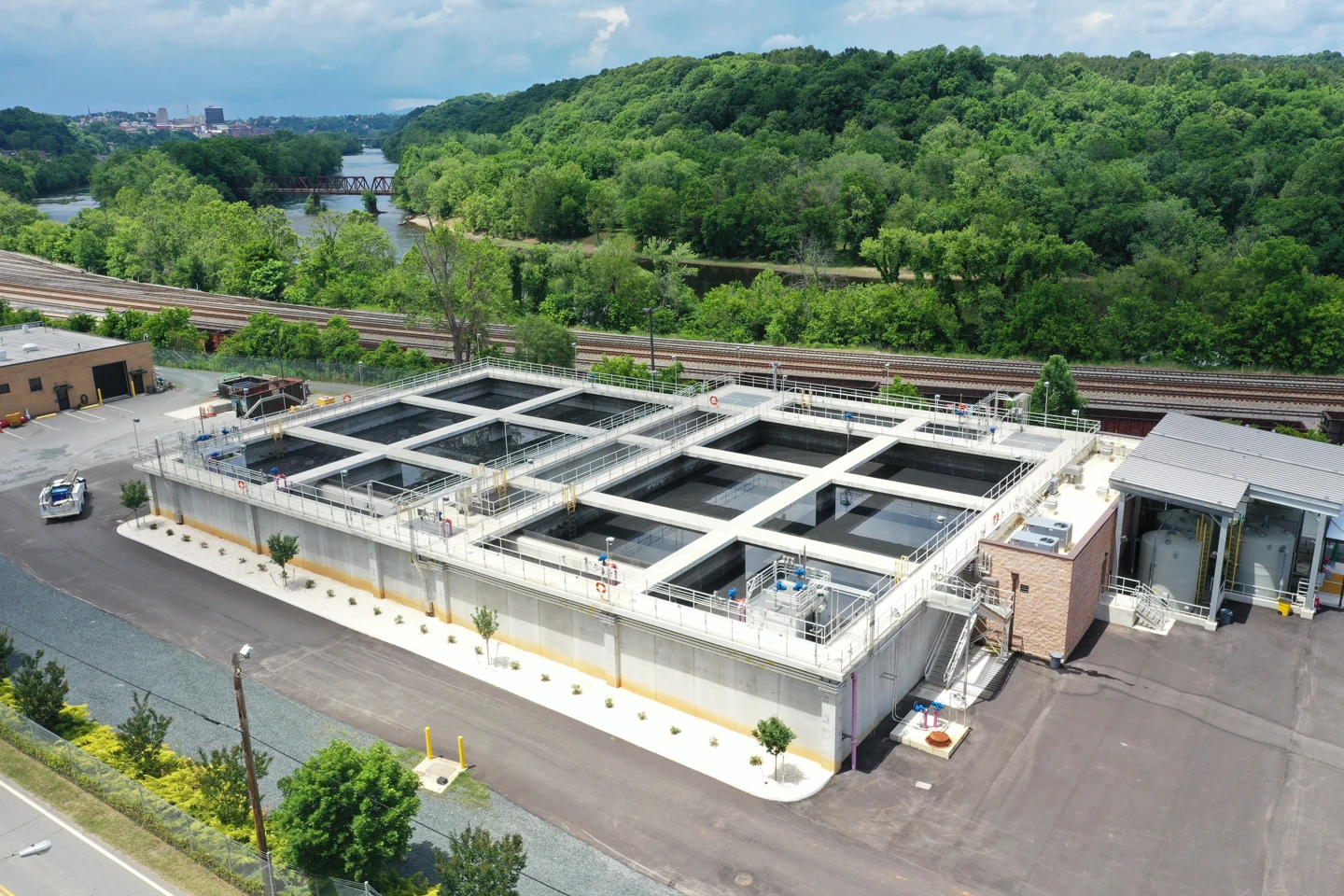
- New wet-weather storage volume [3]
- 4M gallons
- Broader improvements, as reported by PC [3]
- $44M
- Wet-weather pumping capacity [4]
- 76M gal/day
- Residents served by regional plant · 2022 [7]
- 66,508
Why it happened
In parts of Lynchburg, wastewater and stormwater share the same sewer. Heavy rain can bring more water into those pipes than the system can carry or treat at once. Storage gives the plant a buffer for peak flows. [1] [3]
What was built
The 2021 improvement project added a four-million-gallon precast, post-tensioned tank, upgraded screening and grit removal, increased pumping capacity, and converted a clarifier for high-strength wastewater storage. [3] [5]
What changed
The plant gained more capacity to hold, pump, screen, and disinfect flows during storms. This work was one stage in Lynchburg’s long-term overflow control program. The city’s later Blackwater tunnel is a separate project. [3] [2]
Project team
Project photos
Site location
The map opens on the wet-weather storage structure at the western end of the regional plant, beside the rail corridor and the James River.
Project records
-
City of Lynchburg · Combined sewer system
How combined sewers work and where treated water goes.
-
City of Lynchburg · Overflow control project updates
How the treatment-plant work fits within the wider city program.
-
PC Construction · Plant improvements
Cost reported by PC, delivery method, storage capacity, and plant scope.
-
PC Construction · Completion announcement
Wet-weather pumping capacity and 2021 opening.
-
PC Construction · Tank installation record
Construction photo and identification of the precast tank subcontractor.
-
MBP · Construction inspection and project support
Construction oversight and the scope of the city’s improvements.
-
EPA · 2022 Clean Watersheds Needs Survey
Residential population reported for the treatment facility in the 2022 Clean Watersheds Needs Survey. View facility survey data (JSON)